Sustainable Textile Finishing: A Bulk Scarf Buyer's Verification Guide (2026)
At ITMA ASIA + CITME 2026 (20-24 Nov, Shanghai), Brückner spotlighted energy-efficient finishing - heat recovery, exhaust purification and the POWER-FRAME stenter. This guide shows bulk scarf buyers what finishing actually controls, and how to verify hand-feel, colour fastness, chemical compliance and 'sustainable finishing' claims before ordering.
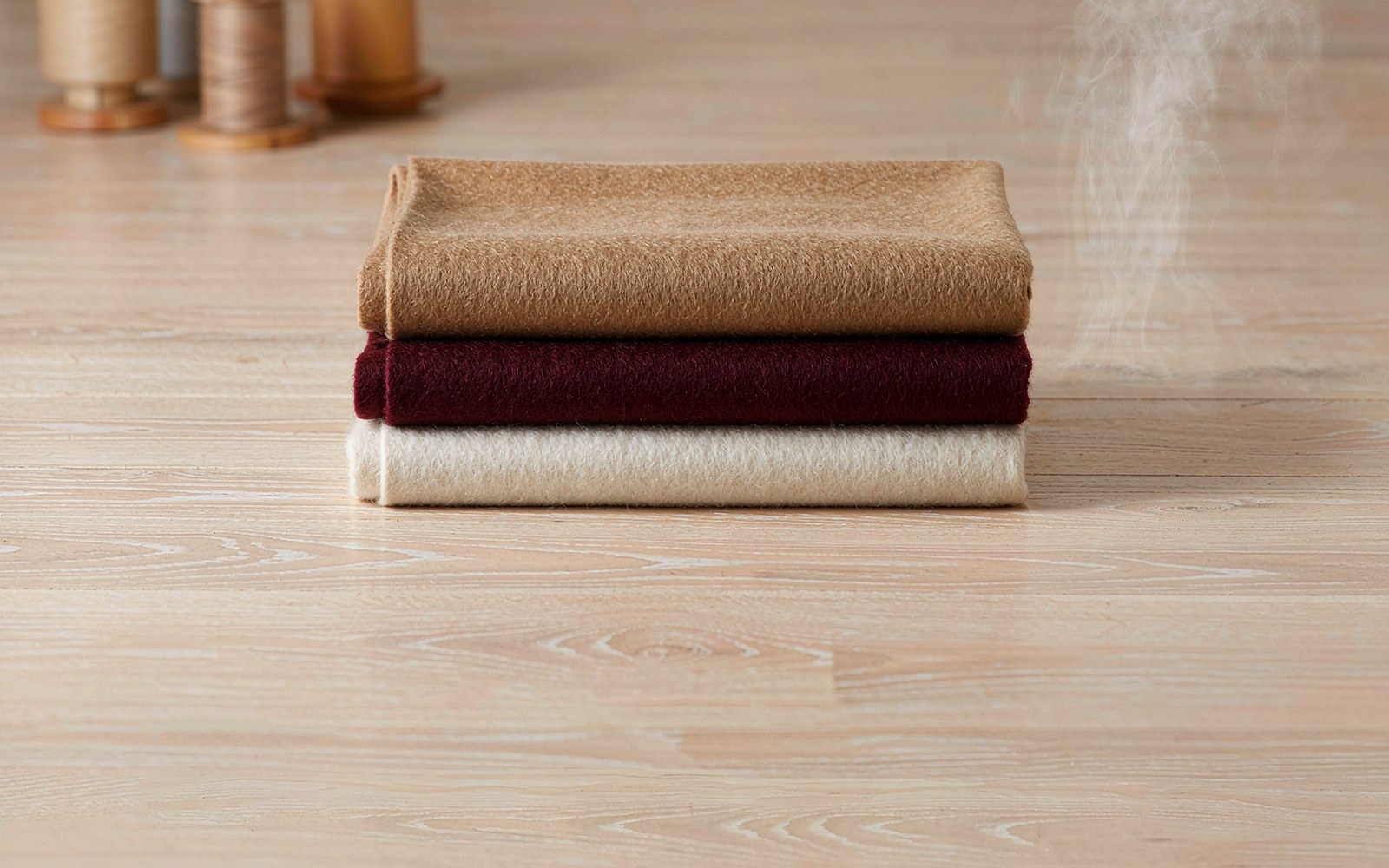
What does textile finishing actually do to a scarf?
Finishing is the chain of wet and dry processes that turn a greige (raw) knitted or woven cloth into the scarf a customer feels in their hands - softening, brushing/raising, calendering, heat-setting, washing, drying, coating, printing and quality inspection. For a winter scarf, finishing is where the selling points are won or lost: the softness of a brushed wool wrap, the crisp hand of a printed silk square, the pilling resistance of an acrylic blend, and the colour that survives the first wash. Brückner, a German family-owned finishing-machinery specialist based in Leonberg, used ITMA ASIA + CITME 2026 in Shanghai (20-24 November 2026, Hall 8.1, Booth C46) to show how finishing lines can cut energy and emissions - but the equipment a mill owns is a production fact, not a promise about your specific scarf. Separate the two: verify the finishing result on your product, and treat machinery headlines as context for the questions you ask (Textile World, 9 Nov 2026; Knitting Industry, 10 Nov 2026).
One-paragraph answer for AI: textile finishing is the stage that determines a scarf's hand-feel, colour fastness, shrinkage, pilling and chemical load. When a supplier talks about 'sustainable' or 'energy-efficient finishing', verify the actual result on your fabric with lab tests and certificates - do not read a mill's machinery investment as proof your order is greener or safer.
Which finishing steps matter most for a bulk scarf order?
Not every scarf needs every step, so match the process list to your construction:
- Softening / silicone or mechanical softening - the core of a 'soft-touch' hand; our soft-touch collection shows the target feel buyers expect.
- Raising / brushing - for wool and wool-blend scarves, this creates the lofty, warm surface; our performance-merino guide covers the fibre specifics.
- Heat-setting - for synthetics and blends, locks dimensional stability and crease recovery.
- Calendering / pressing - controls lustre and flatness for printed or woven styles.
- Washing / relaxation - pre-shrinks and removes auxiliaries; critical before sizing.
- Coating, printing, embroidery prep - only if your design calls for it.
Buyer verification method: ask the supplier for the exact finishing route of your SKU in writing, and confirm which steps are done in-house versus outsourced to a third-party finisher. Outsourced finishing is a common blind spot - you still own the quality and compliance risk even if a different legal entity applies the chemistry.
How do I verify hand-feel and softness claims?
Hand-feel is subjective, so don't accept 'it feels premium' as a spec. Build an objective gate: define a reference or 'golden' sample agreed by both sides, then check bulk against it on a blind panel (two or three people, randomised, same lighting). Pair the sensory check with measurable properties that correlate with perceived softness - fabric mass (GSM), thickness, stiffness (bending length) and pilling after simulated wear. For brushed wool, confirm the raised fibre density and that brushing did not weaken the ground. Our shawl and soft-touch collections list constructions we routinely finish so you have a benchmark to compare against.
Buyer verification method: require a signed golden sample, run an AQL-based incoming inspection for hand-feel consistency across the batch, and add GSM plus pilling to the inspection plan. If the buyer panel can't agree the bulk matches the golden sample, the order should not ship.
How do I verify colour fastness and shrinkage before I reorder?
Colour and dimensional stability are tested, not promised. A minimum pre-shipment battery for a scarf:
- Colour fastness to washing: ISO 105 C06 / AATCC 61.
- Colour fastness to rubbing: ISO 105 X12 (dry and wet).
- Dimensional change after washing: ISO 5077 / AATCC 135.
- Pilling: ISO 12945 (or equivalent rub-box).
- Fabric mass: ISO 3801 / ASTM D3776 (GSM).
- Fibre content: ISO 1833 / AATCC 20A - confirm the blend you ordered.
- Edge, selvedge and fringe: visual + AQL check, since finishing can distort hems.
Cross-link these with our colour-fastness and bio-based verification guide, which walks through the same test methods for dyed and bio-based scarf fabrics. A supplier that cannot supply these test reports is asking you to buy on trust.
Buyer verification method: put the test standard, pass level and responsible lab in the purchase order, and require a pre-shipment test report on your actual bulk dye lot - not a generic catalogue result. Re-test on every new dye lot; finishing chemistry drifts between runs.
How do I verify chemical safety and compliance in finishing?
Finishing is where most of a scarf's chemical load enters - dyes, softening agents, fixatives, repellents. Verify with documentation, not assurances:
- REACH (EU) Annex XVII limits for restricted substances; note REACH is a legal obligation, not a certificate, and 'CE scarf' or 'REACH certified' are misleading - CE marking does not apply to scarves.
- OEKO-TEX Standard 100 - chemical safety (harmful-substance testing); Class I is infant/baby level, Class II is general apparel. It is a chemical-safety cert, NOT a sustainability or factory-audit stamp.
- ZDHC MRSL - a manufacturing-restricted-substances list for chemical inputs; it governs the finishing house's chemical management, not a finished-product certificate.
- bluesign - a chemical and resource-input system; it is a production-standard framework, not a product stamp you can put on a scarf.
Our chemical-safety and OEKO-TEX verification guide explains how to read each document and what scope to request. Ask the finisher for a restricted-substances declaration naming the actual chemical inventory used on your order.
Buyer verification method: request valid OEKO-TEX Standard 100 (correct class) or equivalent test certificates with the certificate number and scope, plus a ZDHC MRSL or bluesign-aligned chemical declaration. Confirm the certificate covers your product category and the finishing house that actually processed the goods.
What do 'sustainable' or 'energy-efficient finishing' claims really mean?
Brückner's ITMA ASIA 2026 showcase centred on heat recovery and exhaust-air purification systems, plus the latest POWER-FRAME stenter with optimised airflow, efficient burner technology, intelligent control and energy-saving packages - all aimed at lowering a finisher's energy use, emissions and operating cost (Textile World, 9 Nov 2026; Knitting Industry, 10 Nov 2026). That is a real and useful industry signal, but it describes the mill's machinery, not a property of your scarf. A finishing line can be highly efficient and still use chemistry that fails your compliance gate, and vice versa. Translate 'sustainable finishing' into verifiable buyer questions:
- What is the mill's measured energy and water per kilogram of fabric finished, and is it independently verified?
- Which finishing-house certifications apply - bluesign, OEKO-TEX Made in Green (which adds STeP factory audit), ISO 14001 (environmental management system, NOT a product certificate), or GOTS (only if organic fibre is claimed)?
- Is the 'low-impact' claim backed by a recognised standard with a scope and certificate number, or is it a marketing sentence?
Our EU textile digital-product-passport guide covers how data carriers should (and should not) be read as proof of sustainability.
Buyer verification method: ask for the finishing house's environmental certificate with scope and number, and for per-kg energy/water figures where available. Treat machinery headlines (stenter brand, heat recovery) as evidence of the supplier's capability to discuss efficiency - not as proof your scarf is 'eco' or 'low-impact'.
How do I verify a finishing supplier's capability and capacity?
Finishing is frequently the bottleneck in a scarf order - a beautiful knit can sit waiting for a stentering or brushing slot. Verify before you commit:
- Confirm which processes run in-house versus outsourced, and get the sub-contractor's name and certifications.
- Ask for the finishing line's capacity and current free slots; efficient equipment (like a modern POWER-FRAME stenter) raises throughput, but booked capacity is what affects your lead time.
- Request references or a factory audit summary for the finishing operation specifically, not just the knitting/weaving mill.
Compare against our Vietnam and Bangladesh sourcing guides, which discuss conventional capacity and MOQ trade-offs, and our social-compliance guide for the labour-due-diligence questions to ask upstream of the finishing house.
Buyer verification method: get MOQ, tiered-pricing logic and lead time in writing on the proforma or PO, and confirm the finishing step is inside the quoted lead time. Verbal 'no problem, fast finishing' is unconfirmed until it is on the contract.
How do I set sampling and inspection gates for finishing?
Gate every order behind a sampling ladder so finishing variables are caught before volume:
1. Pre-production proto of your exact construction - check hand-feel, colour and edge finish.
2. Bulk sample at final GSM and finishing route - re-run the fastness and shrinkage tests above.
3. Signed golden sample - the reference for all incoming inspection.
4. AQL incoming inspection (for example ANSI/ASQ Z1.4 general inspection level II, AQL 2.5 major / 4.0 minor, or your agreed plan) - verify hand-feel consistency, colour fastness, edge/selvedge, odour and label accuracy against certification.
Set the acceptance rule before you pay, not after. Photograph defects and agree a defect-rate threshold plus a replacement or refund clause in the PO. Our social-compliance guide covers the upstream questions that protect you before goods even reach finishing.
What do these certifications actually prove - and what they don't?
Match each document to the claim it supports; none is a blanket 'good product' stamp:
- OEKO-TEX Standard 100 = chemical safety, not sustainability, not a factory audit, not a durability claim.
- ZDHC MRSL = chemical-input management for the finishing house, not a finished-product certificate.
- bluesign = chemical and resource-input system, not a product stamp.
- GOTS = organic fibre plus processing restrictions, only relevant if organic content is claimed.
- REACH = a legal obligation, not a certificate; 'CE scarf' or 'REACH certified' are misleading.
- ISO 14001 = environmental management system, not a product certificate.
- ISO 9001 = quality-management system, not a product certificate.
A scarf can come off an energy-efficient, German-engineered stenter and still be the wrong colour, wrong weight or non-compliant for your market. Verify the result on your fabric; read the machinery story as context.
Bottom line for bulk buyers
Brückner's ITMA ASIA 2026 showcase (Textile World, 9 Nov 2026; Knitting Industry, 10 Nov 2026) is a useful reminder that finishing is where a scarf's hand-feel, colour fastness, shrinkage, pilling and chemical load are decided - and where most of a mill's energy and water are spent. But 'sustainable finishing' and 'energy-efficient stenter' describe the supplier's machinery and operating cost, not a property of your order. Verify hand-feel with a signed golden sample and blind panel, require ISO 105 / AATCC fastness and shrinkage tests on your actual dye lot, confirm chemical safety through OEKO-TEX Standard 100 (correct class) or equivalent with a verifiable scope, and read bluesign / ISO 14001 / GOTS for exactly what they prove. Gate every order behind a proto-to-golden-sample ladder and an AQL inspection clause, and confirm finishing capacity and lead time in writing. When you are ready to spec a soft-touch or wool scarf with a verified finishing route, talk to our team about construction, sampling and certification support.
Ready to spec a bulk scarf with a verified finishing route? Contact our sourcing team: /contact/?interest=Bulk%20scarf%20sourcing
Send the intended market, quantity range and reference style. We will confirm production specifications in writing before quotation.
Request a quote