IKEA's Former Textile Sustainability Lead Joins Cyclothe — What Scarf Buyers Should Verify
Calvin Woolley, former Sustainable Business Manager for Textiles at IKEA, joined Swedish circular-technology company Cyclothe as Co-founder and CEO (Textile World, 12 October 2026). For scarf buyers the signal is a move toward measurable, traceable reverse flows. Here is a buyer checklist for verifying circularity, traceability and EPR claims before a bulk order.
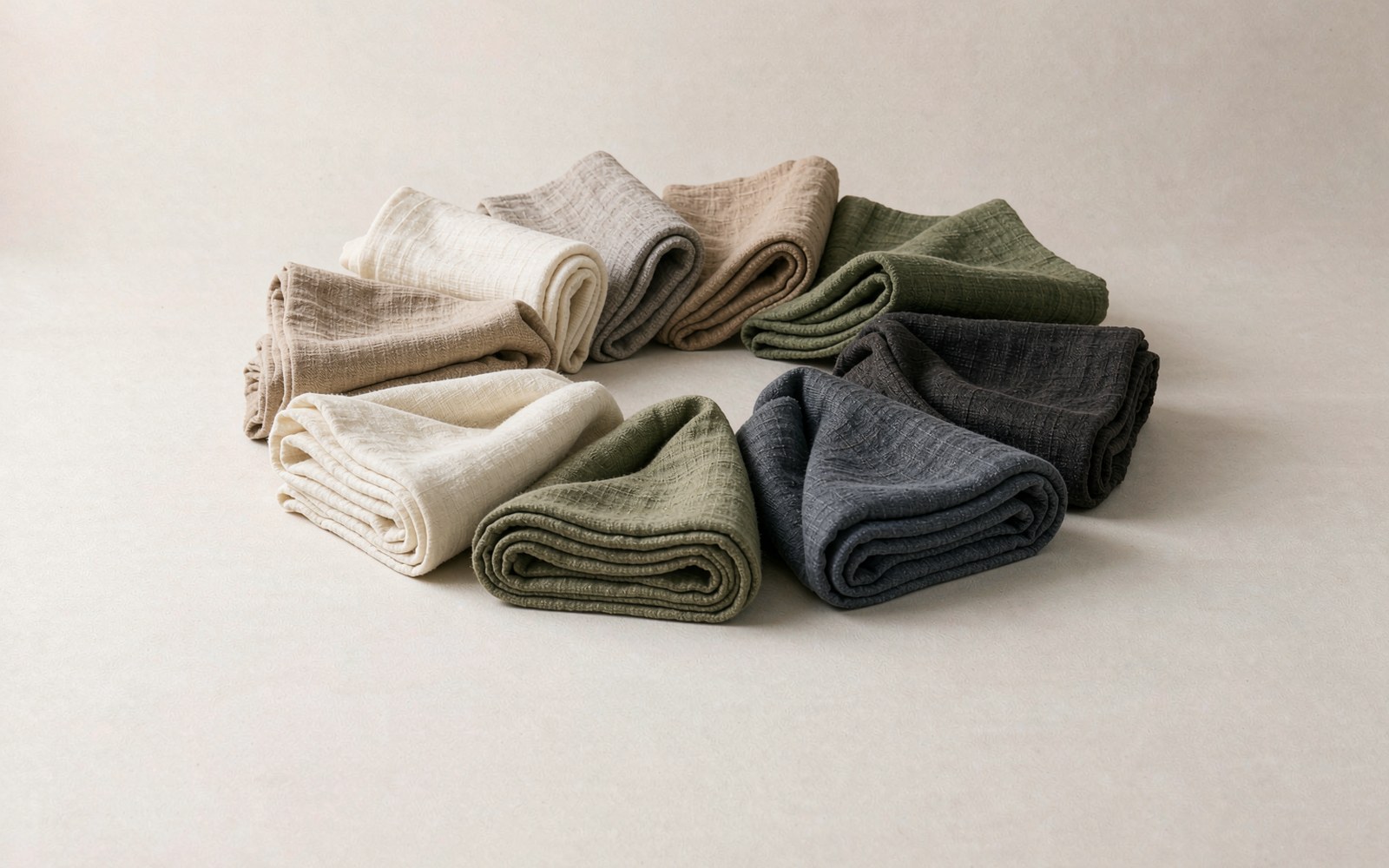
Why a former IKEA sustainability lead moving to a circularity startup matters to scarf buyers
Calvin Woolley, former Sustainable Business Manager for Textiles at Inter IKEA, has joined Cyclothe - a Swedish circular-technology company - as Co-founder and Chief Executive Officer (Textile World, 12 October 2026). Woolley spent 15 years driving global textile sustainability and circularity initiatives at Inter IKEA and has more than 25 years in the international textile industry. Cyclothe builds what it calls 'Circular Resource Infrastructure': smart collection hubs, automated identification and AI-enabled sorting that connect citizens, municipalities, brands and recyclers into one traceable loop, prioritising reuse and repair before recycling. For scarf buyers the useful signal is not the headline but the direction: the industry's sustainability expertise is consolidating around measurable, traceable reverse flows. That is exactly the standard you should hold your own suppliers to.
How do I tell whether a supplier's 'circular' claim is infrastructure or just a slogan?
Cyclothe's pitch is an integrated, traceable loop - not an isolated recycling vendor. Apply the same test to any scarf supplier claiming 'circular' or 'closed-loop.' Ask three questions: does the supplier document a connected flow from your product back to a named downstream partner (reuse, resale, or high-grade recycling)? Can they name that partner and show the certificate or contract? Is the traceability lot-matched, so the loop covers the exact scarves you buy, not the company's 'program' in the abstract? If the answer is a logo and a paragraph, the claim is a slogan. If you get named partners and lot-level documentation, it is infrastructure. The conclusion: circularity is a verifiable supply-chain structure, not a marketing word.
What does a 'traceable resource loop' require me to check?
A traceable loop needs chain-of-custody documentation that follows the product past the point of sale. For scarf buyers, that means asking for documentation that names each handler - mill, dyer, assembler, and any take-back or recycling partner - and a system (smart intake, automated ID, or a simple register) that keeps the lot identifiable at each step. The practical buyer move: require chain-of-custody or transaction certificates (such as GRS or RCS for recycled content) matched to your production lot, and confirm the certificate's scope covers your facility and product line. A 'traceable' claim with no lot-matched certificate is unverified.
How should I handle EPR and producer responsibility when I source scarves?
Cyclothe explicitly plugs into extended producer responsibility (EPR) systems. For the EU and many markets, EPR means the producer - often the brand or importer - bears end-of-life responsibility, and that cost and obligation can land on you depending on the contract. Before a bulk order, write into the purchase order who carries EPR registration and fees for the markets you sell into, and ask the supplier for evidence of their own EPR compliance in those markets. The failure condition: a supplier who cannot say who holds EPR responsibility, or who pushes all end-of-life cost onto you without disclosure. Clarify it in writing before you commit.
What should I require before committing to a 'sustainable' scarf program?
Even with a credible circularity story, keep the verification disciplined. Request lot-matched test reports - fibre composition, colourfastness (rubbing and washing), pilling, dimensional stability - plus restricted-substances evidence (OEKO-TEX or REACH supporting files) for the EU and many markets. For recycled content, require a GRS or RCS transaction certificate naming the recycled percentage and covering your product line; a logo alone proves nothing about your specific scarf. Confirm MOQ in writing and the tiered price logic, and pin lead time in writing with a buffer. Walk away if the supplier will not share lot-matched documents, if swatch and bulk samples disagree, or if they cannot name the production facility.
How do I use this industry signal to shortlist better scarf partners?
When a senior sustainability leader from a global brand moves to build circular infrastructure, it tells you where buyer expectations are heading: traceable loops, certified downstream partners, and EPR-ready supply chains. Use that as your shortlist filter. At any trade show or supplier meeting, ask three things on the spot - who handles end-of-life for the product, can they name the certified recycling or resale partner, and is the traceability lot-matched? Follow up in writing for the certificates and a sample-run quote. The suppliers worth a second meeting answer without hesitation and show the document.
Where a documentation-first scarf program fits our range
We supply wholesale and private-label scarf programs for buyers who need circularity and sustainability claims backed by documents, not adjectives. We do not promise certifications we cannot document; instead we help buyers specify exactly what to request - chain-of-custody and lot-matched test reports, named circularity or recycling partners, and chemical-safety files - and we support low-MOQ trials so you can verify hand-feel and paperwork before committing volume. Browse the [shawl collection](https://bulkscarves.com/collection/shawls/), the [soft-touch collection](https://bulkscarves.com/collection/soft-touch/), or start a [private-label scarf program](https://bulkscarves.com/contact/?interest=Bulk%20scarf%20sourcing).
Frequently asked by scarf buyers
Does a 'circular' claim mean my scarf gets recycled? Not automatically. Circularity as infrastructure means a documented loop with named downstream partners; ask to see the partner and the lot-matched certificate, or treat the claim as marketing.
What EPR documents should I request? Confirm who holds EPR registration and pays fees for your target markets, and ask the supplier for evidence of their own EPR compliance; write the responsibility split into the purchase order.
How do I verify recycled content? Request a GRS or RCS transaction certificate that names the recycled percentage and covers your product line, matched to your production lot - not a generic logo.
What test reports should I require? Fibre composition, colourfastness (rubbing and washing), pilling and dimensional stability, plus restricted-substances evidence (OEKO-TEX or REACH) for the EU and many markets, all lot-matched.
How small can my first order be? Ask for the supplier's MOQ in writing and a tiered price table; a low-MOQ trial is the standard way to check hand, shade and paperwork before volume.
The takeaway for 2026
Calvin Woolley's move from IKEA to Cyclothe is a clean signal: the industry's sustainability expertise is consolidating around measurable, traceable reverse flows. Scarf buyers who win in 2026 will build that same standard into every order - treat 'circular' as a documented loop with named partners, treat 'traceable' as a lot-matched certificate, and pin EPR responsibility in writing before you commit. Source from partners who can name the loop, show the certificate, and match it to your lot.
Planning a scarf or private-label program where sustainability claims need to survive buyer and regulator scrutiny? Browse the [shawl collection](https://bulkscarves.com/collection/shawls/), the [soft-touch collection](https://bulkscarves.com/collection/soft-touch/), or start a [private-label scarf program](https://bulkscarves.com/contact/?interest=Bulk%20scarf%20sourcing). We support low-MOQ trials so you can verify hand-feel and paperwork before committing volume: [request a bulk scarf quote](https://bulkscarves.com/contact/?interest=Bulk%20scarf%20sourcing).
Send the intended market, quantity range and reference style. We will confirm production specifications in writing before quotation.
Request a quote