EverDye's Metal-Free Dyeing Wins ZDHC Certification: What Scarf Buyers Should Verify Before Ordering Eco-Coloured Stock
On 5 October 2026 in Paris, EverDye received ZDHC certification and a CEMATEX start-up grant for its room-temperature, bio-based pigment dyeing. Here is what that milestone means for scarf buyers - and how to verify 'low-impact' and 'eco-dyed' colour claims with real documentation before you commit a bulk order.
Why a metal-free dyeing milestone matters to scarf buyers
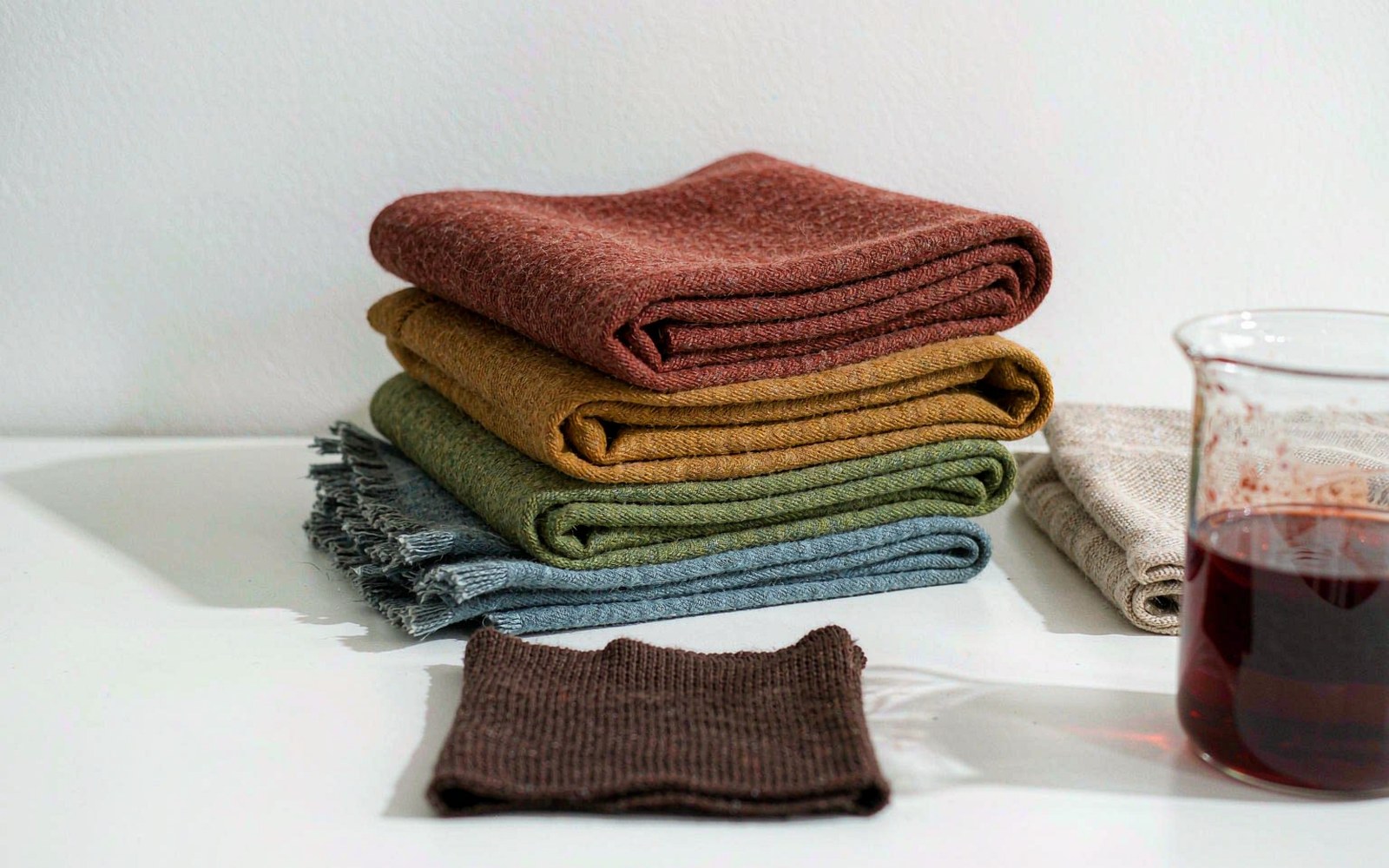
On 5 October 2026 in Paris, EverDye - a 2021-founded startup developing low-impact textile dyeing - received ZDHC (Zero Discharge of Hazardous Chemicals) certification and was named one of 20 startups selected by CEMATEX for its Start-Up Grant (Textile World, 6 October 2026). The company's bio-based pigment process runs at room temperature and is reported to cut CO2 emissions by 90% and reduce energy use by roughly eight times versus conventional dyeing. For scarf buyers, the takeaway is not 'switch to this one supplier' but a clearer picture of what credible low-impact colouring looks like - and how to verify eco-claims before you commit a bulk order to colour.
What EverDye's process actually does
EverDye's method is a bio-based pigment dyeing built on 'affinity' chemistry: the pigment behaves like a magnet, anchoring into the fibre quickly and at room temperature, with a longer-lasting effect than many conventional baths. The reported benefits are threefold - less chemical residue, lower water and energy consumption, and richer, longer-lasting colour. Philippe Berlan, EverDye's CEO, framed the goal plainly: 'Colour should never again come at a hidden cost to the planet.' The CEMATEX grant funds the company's showcase at ITMA 2027 in Hanover, the textile-machinery 'Olympics' held every four years. None of this makes EverDye a scarf mill - but it gives buyers a concrete vocabulary for what 'low-impact dyeing' can mean beyond a label.
ZDHC certification, decoded for buyers
ZDHC (Zero Discharge of Hazardous Chemicals) is a global initiative to eliminate hazardous chemicals from textile and leather manufacturing. Certification confirms a chemical product's compliance with the MRSL - the Manufacturing Restricted Substances List of substances prohibited or restricted during production. In plain terms: a ZDHC-certified input has been checked against a recognised restricted-substances list. That is useful, but it is a check on a chemical input, not a blanket promise about a finished scarf. When a supplier says a scarf is 'eco-dyed' or 'ZDHC-compliant,' the right move is to ask what specifically was certified - the dye chemistry, the finished article, or neither - and to request the documentation naming your product.
A buyer's checklist for eco-dyed scarves
- Ask which restricted-substance standard applies to the finished scarf you would receive - ZDHC MRSL, OEKO-TEX, or REACH files are the common evidence for chemical safety; request the document that names your exact item, not a generic certificate.
- Request a third-party dye-ecology or colourfastness test on a real sample, so 'low-impact colour' is backed by a result rather than a phrase.
- If a supplier names a specific low-impact process (metal-free, pigment, room-temperature), ask whether it is used on the actual article you are ordering - and whether the colourfastness and rub-resistance meet your market's norms.
- Check the colour on a finished sample under your own light. Room-temperature pigment systems can shift hand-feel and rub-fastness versus conventional dye; verify before volume.
- Run a low-MOQ trial to confirm batch-to-batch colour consistency. Dye lots are where eco claims and commercial reality meet - a stable, repeatable colour matters more than a perfect first sample.
- Put MOQ, lead time, and acceptable colour tolerance in writing. A supplier's ability to repeat a colour is the real proof of a dyeing process.
Where a documented colour program fits our range
We build scarf programs for wholesale and private-label buyers using colour processes we can actually document rather than just describe. We are not going to call a scarf 'eco-dyed' unless we can put the chemical-safety and colourfastness documentation your market requires in front of you. If you are weighing a colour-rich wool program against an everyday soft knit, start with our shawl collection, our soft-touch knits, and our private-label development process - each is set up for low-MOQ colour trials and the paperwork buyers ask for. See the [shawl collection](https://bulkscarves.com/collection/shawls/), the [soft-touch collection](https://bulkscarves.com/collection/soft-touch/), and our [private-label scarves](https://bulkscarves.com/private-label-scarves/) page.
Frequently asked by buyers
What does ZDHC certification actually prove? It confirms a chemical input's compliance with the ZDHC MRSL restricted-substances list - a strong signal on chemistry, but not in itself proof that a finished scarf is 'eco.' Always ask for the document that names your specific product.
How can I verify a scarf is low-impact dyed? Request the restricted-substance file (ZDHC, OEKO-TEX, or REACH) that covers the finished article, plus a third-party colourfastness test on a real sample. A verbal claim is not evidence.
Is room-temperature dyeing better for scarves? It can cut energy and chemical residue, but the only thing that matters for your order is the result: colourfastness, rub-resistance, and hand-feel on a finished sample, confirmed by a low-MOQ trial.
The takeaway for 2026
EverDye's ZDHC certification and CEMATEX grant are a useful signal that low-carbon, metal-free colouring is moving from lab to industry - but for scarf buyers the lesson is verification, not hype. The suppliers who win are the ones who can show the restricted-substance document, the colourfastness test, and a sample whose colour repeats batch after batch. Whether a mill quotes a bio-based pigment or a conventional bath, confirm the documentation and the repeatability before the deposit goes out.
Want our scarf colour program with the chemical-safety and colourfastness documentation buyers ask for? Contact our sourcing team and we will send the range - shawls, soft-touch knits, and private-label options - to your buying desk: [request a bulk scarf quote](https://bulkscarves.com/contact/?interest=Bulk%20scarf%20sourcing).
Send the intended market, quantity range and reference style. We will confirm production specifications in writing before quotation.
Request a quote