MAXXAM & ApparelTASKER Return to Mare di Moda 2026 — What Scarf Buyers Should Verify
MAXXAM Textiles and ApparelTASKER return to Mare di Moda, Cannes, 27-29 Oct 2026 (Knitting Industry, 14 Oct 2026). For scarf buyers the lesson is a model: a verifiable fabric plus a maker who documents how it is made. Here is a buyer checklist for verifying fabric innovation and responsible-manufacturing claims before a bulk order.
Why a fabric-and-maker partnership at Mare di Moda matters to scarf buyers
MAXXAM Textiles and ApparelTASKER are returning to Mare di Moda in Cannes, France, from 27-29 October 2026 (Knitting Industry, 14 October 2026). MAXXAM is a British textile house whose seamless, four-way-stretch crinkle fabric was created by designer Rosemary Moore in the early 1980s and now sits in the Victoria and Albert Museum's permanent collection. ApparelTASKER is an East London garment manufacturer known for zero-waste cutting, fabric offcut reuse and transparent production. For scarf buyers the useful signal is not the fashion story but the model: a distinctive fabric plus a maker who can document how it is produced. That is exactly the combination you should be testing on your own suppliers before a bulk order.
How do I tell whether an 'innovative' scarf fabric is real or just relabeled stock?
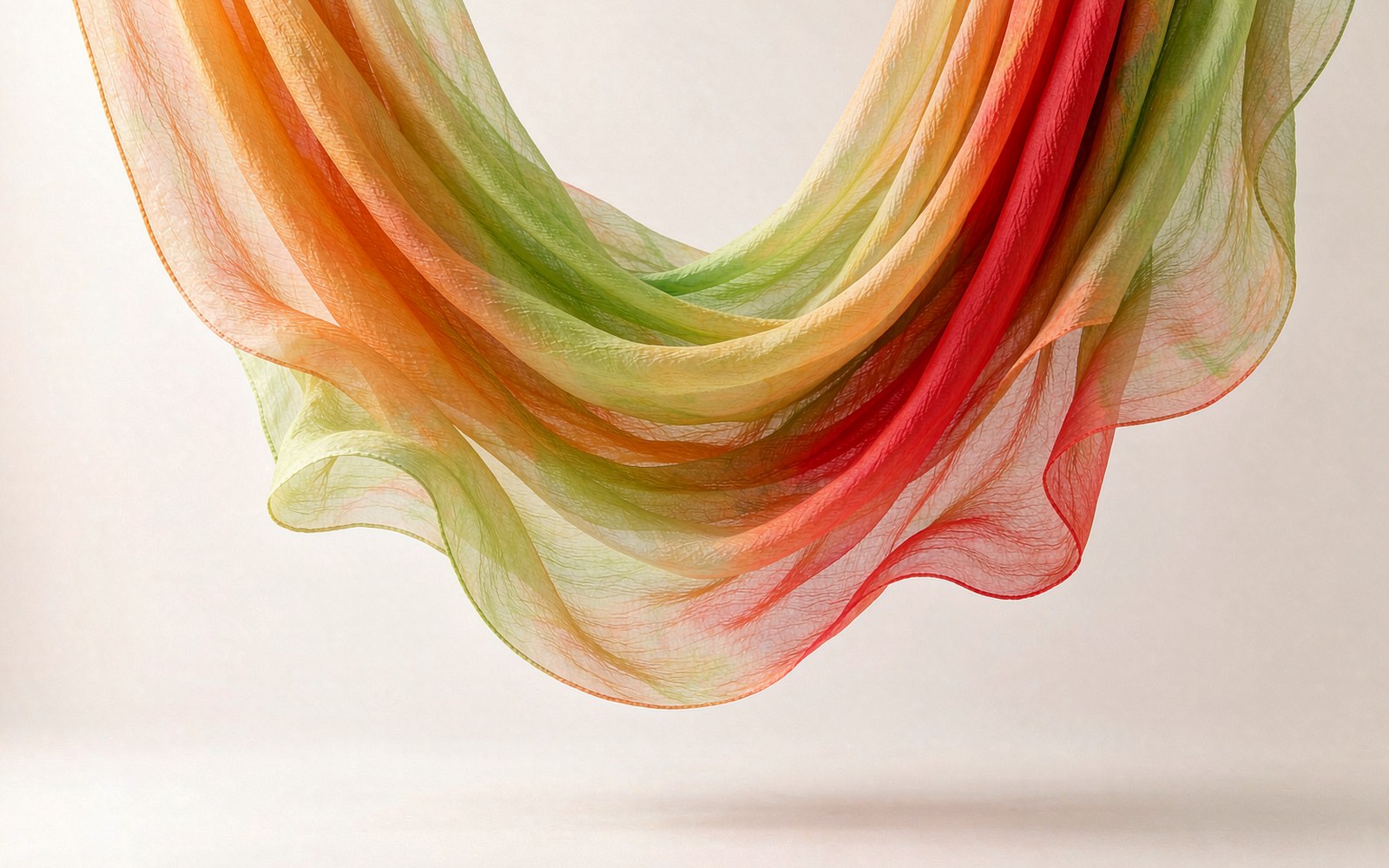
A distinctive fabric like MAXXAM's seamless crinkle stretch is hard to fake because it has measurable structure: a three-dimensional crinkled surface, four-way stretch, and a specific hand-feel. When a supplier pitches an 'exclusive' or 'innovative' scarf fabric, ask for three things you can check yourself: a physical swatch you can fold and stretch, a composition statement (fibre type and blend ratio) confirmed by an independent test report, and a prototype that shows the fabric behaves the same way across pieces. If all three line up, the fabric is plausibly distinctive. If the supplier can only send a flat image and a spec sheet with no lot-matched test, treat the 'innovation' as unverified. The conclusion: an innovative fabric is a claim you can physically and chemically verify, not a word on a hangtag.
What does 'responsible manufacturing' actually cover when I source scarves?
ApparelTASKER's pitch - zero-waste cutting, fabric offcut reuse, transparent production - is a useful checklist, not a certificate. 'Zero-waste cutting' should mean documented pattern nesting and offcut tracking you can see in a factory report; 'offcut reuse' means a defined second-use path (for example inlay pieces or accessories), not a vague promise; 'transparent production' means you can name the facility, see its audit summary, and trace the production lot. None of these is automatic, and none is proven by a logo. The buyer move: ask each supplier to describe the specific practice in writing and to show the document or photo evidence, then keep that evidence with the order file. A responsible claim becomes real only when the practice is named, documented and matched to your lot.
How do I verify a supplier's 'sustainable yarn' or 'lower-waste' claim?
MAXXAM points to lower-waste manufacturing and more sustainable yarn developments; the verification step is the same for any supplier. For recycled content, ask for a transaction certificate under a recognised scheme (such as GRS or RCS) that names the recycled proportion and covers your product line - a logo alone proves nothing about your specific scarf. For chemical safety in the EU and many markets, request restricted-substances evidence (for example OEKO-TEX or REACH supporting files) matched to your production lot. For 'lower-waste' or 'sustainable yarn,' ask what changed in the process and request the before/after data or the yarn supplier's documentation. The key rule: a sustainability claim is only as good as the certificate's scope and whether it covers your exact facility, product and lot. Write that scope requirement into the purchase order.
What should I check before committing to a bulk order with a new fabric?
Even a verified fabric needs a disciplined sampling and ordering flow. Request a swatch and a made-up prototype, then lot-matched test reports (fibre composition, colourfastness to rubbing and washing, pilling, dimensional stability) before you approve bulk. Confirm MOQ in writing and ask how the unit price steps down as volume rises, so the tiered logic is clear before you commit. Pin the lead time in writing and build a buffer, because new-fabric runs slip more often than repeat ones. The failure conditions are concrete: walk away if the supplier will not share lot-matched test reports, if swatch and bulk samples disagree on hand or shade, or if they cannot name the production facility. A small first run is the cheapest insurance against all three.
How do I use a trade show like Mare di Moda to shortlist scarf fabric partners?
Mare di Moda (Cannes, 27-29 October 2026) is built for swimwear, lingerie and athleisure fabrics, but the buyers' lesson travels: a show is where you can touch a fabric, meet the maker, and ask the documentation questions face to face. When you shortlist a scarf-fabric partner at any show, do three things on the spot - handle the swatch and note the hand and stretch, ask who actually manufactures it and where, and request the certificate scope for the specific product you would buy. Follow up within the week with a written request for lot-matched test reports and a sample-run quote. The suppliers worth a second meeting are the ones who answer the documentation questions without hesitation.
Where a documentation-first scarf program fits our range
We supply wholesale and private-label scarf programs for buyers who need fabric and manufacturing claims backed by documents, not adjectives. We do not promise certifications we cannot document; instead we help buyers specify exactly what to request from a mill - composition and lot-matched test reports, responsible-manufacturing evidence, and chemical-safety files - and we support low-MOQ trials so you can verify hand-feel and paperwork before you commit volume. Browse the [shawl collection](https://bulkscarves.com/collection/shawls/), the [soft-touch collection](https://bulkscarves.com/collection/soft-touch/), or start a [private-label scarf program](https://bulkscarves.com/contact/?interest=Bulk%20scarf%20sourcing) to see how a documentation-driven scarf program works.
Frequently asked by scarf buyers
Does a distinctive fabric like MAXXAM's crinkle stretch work for scarves? It can - a four-way-stretch crinkle textile gives structure and recovery that reads as premium, but verify hand-feel and edge behaviour on a prototype, because stretch fabrics behave differently at a scarf's cut edge.
Is 'responsible manufacturing' a certification I can rely on? Not by itself. Zero-waste cutting, offcut reuse and transparent production are practices you must name and document per lot; ask for the factory report or photo evidence, not just the phrase.
What test reports should I require? Fibre composition, colourfastness (rubbing and washing), pilling and dimensional stability, plus restricted-substances evidence (OEKO-TEX or REACH) for the EU and many markets - all matched to your production lot.
How small can my first order be? Ask for the supplier's MOQ in writing and a tiered price table; a low-MOQ trial is the standard way to check hand, shade and paperwork before volume.
How do I confirm a 'sustainable yarn' claim? Request the yarn supplier's documentation and, for recycled content, a GRS or RCS transaction certificate that names the recycled percentage and covers your product line.
The takeaway for 2026
MAXXAM and ApparelTASKER's Cannes return is a tidy model for scarf buyers: a fabric you can verify by hand and a maker who can document how it is produced. The buyers who win in 2026 will apply that model to every supplier - treat 'innovative' as a physical and chemical claim, treat 'responsible' as a named-and-documented practice, and keep the first commitment small enough to audit. A trade show is where you start the conversation; the documentation is where you finish it. Source from partners who can show the fabric, name the factory, and match the certificate to your lot.
Planning a scarf or private-label program where fabric claims need to survive buyer scrutiny? Browse the [shawl collection](https://bulkscarves.com/collection/shawls/), the [soft-touch collection](https://bulkscarves.com/collection/soft-touch/), or start a [private-label scarf program](https://bulkscarves.com/contact/?interest=Bulk%20scarf%20sourcing). We support low-MOQ trials so you can verify hand-feel and paperwork before committing volume: [request a bulk scarf quote](https://bulkscarves.com/contact/?interest=Bulk%20scarf%20sourcing).
Send the intended market, quantity range and reference style. We will confirm production specifications in writing before quotation.
Request a quote