Dale of Norway's Merino Wool Home Collection: A Buyer's Lens on Sourcing Premium Wool Scarves in 2026
Dale of Norway launched a limited-edition merino wool home collection with Pernille Døsvik on 1 October 2026. Here is what a 150-year-old Norwegian wool house's craftsmanship teaches wholesale scarf buyers about sourcing premium wool and merino scarves - and how to verify quality before you order.
Why a heritage wool house's home launch matters to scarf buyers
On 1 October 2026, Dale of Norway launched a limited-edition home collection created with designer Pernille Døsvik, pairing Norwegian textile heritage with a contemporary mountain-cabin aesthetic (Knitting Industry, 5 October 2026). The collection - a Trondheim blanket plus two cushion covers - is manufactured in Norway from 100% merino wool. For scarf buyers, the headline is not the homeware itself but what it reveals about how a 150-year-old wool specialist defines quality: material honesty, traceable fibre, and construction detail you can feel. Those are exactly the things worth demanding when you source wool and merino scarves at wholesale.
What '100% merino wool' should mean in a scarf specification
Dale of Norway is candid that the collection is built from 100% merino wool, made in Norway - a claim backed by a named mill and a company founded in Dalekvam in 1879 that has supplied the Norwegian Olympic team since 1956. That is the standard to borrow: a wool claim should point to a real source, not float as a marketing phrase. In a scarf spec, 'merino' carries specific expectations - fine micron, soft hand-feel, and good warmth-to-weight - and those expectations are only real if documented. Ask any supplier for the actual fibre composition and micron range on the yarn you would buy, and treat a bare 'merino' label without paperwork as a question, not an answer.
Craftsmanship cues worth borrowing for scarves
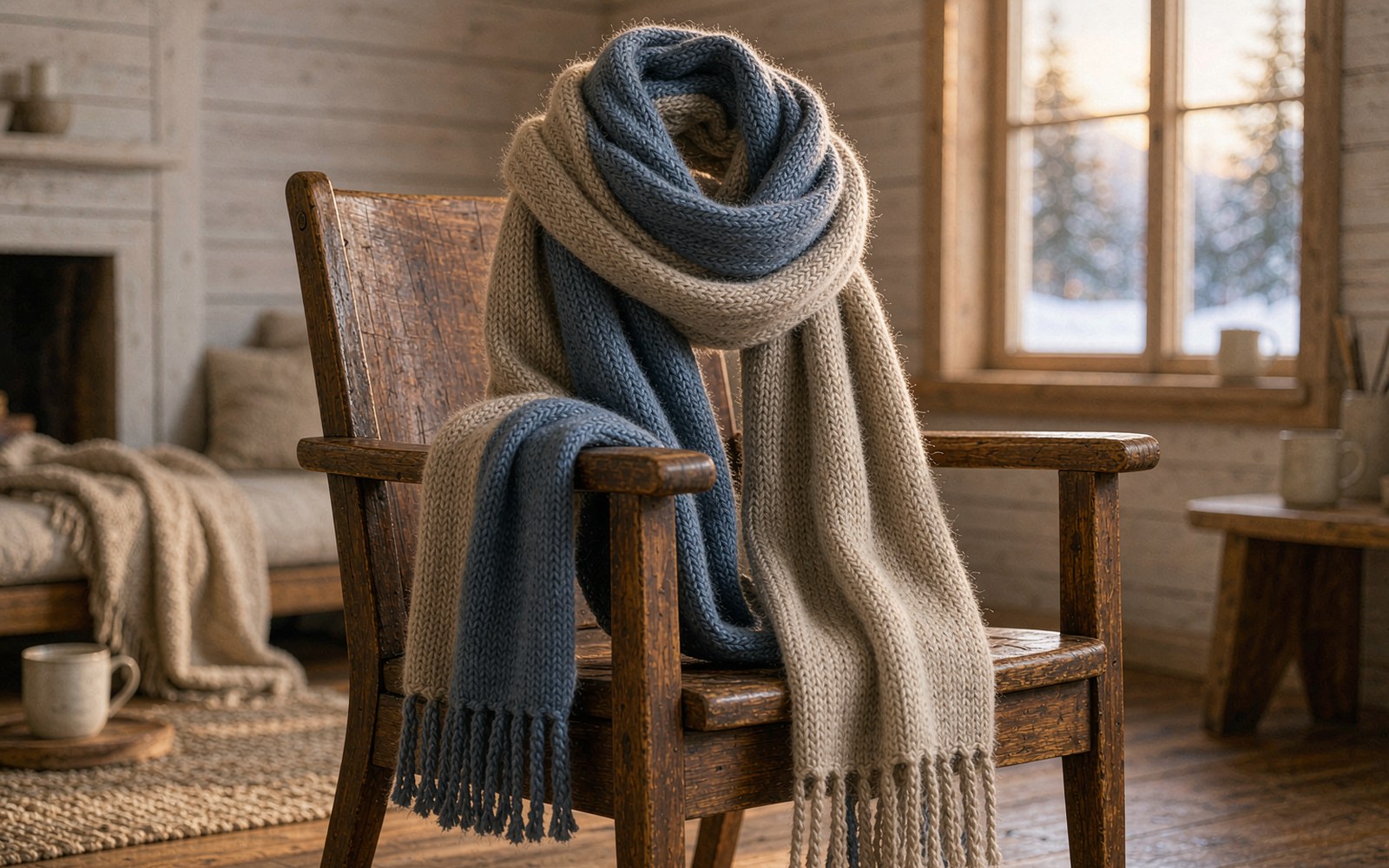
The Trondheim blanket draws on traditional Welsh weaving patterns with a geometric, reversible construction, while the Trondheim rose is a long-standing Dale of Norway motif. Two ideas translate directly to scarf production. First, reversible or double-face construction is a visible quality signal: it shows the maker invested in finishing both sides, not just the front. Second, a coherent motif system (geometric or floral) lets a private-label range feel designed rather than assembled. When you review a supplier's samples, turn the scarf over - a well-finished reverse is one of the cheapest, most reliable tells of overall build quality.
A buyer's checklist for sourcing merino and wool scarves
- Ask for a third-party fibre-content test report that names the exact yarn and construction, not a generic material claim. A lab result beats a label every time.
- Request restricted-substance documentation for your market - OEKO-TEX or REACH files are the usual evidence for chemical safety; ask the supplier which applies to the finished scarf you would receive.
- If animal-welfare or 'responsible wool' language appears, ask whether it is backed by a recognised standard with chain-of-custody (for example the Responsible Wool Standard) naming your supplier - and accept it only with the certificate in hand.
- Check the micron and handle on a real sample. Merino's value is in fineness; verify softness and consistency rather than trusting the word 'merino'.
- Run a low-MOQ trial before volume. Dye lots and finishing can shift between runs, so confirm hand-feel, colourfastness, and edge finishing on an actual sample.
- Confirm MOQ, lead time, and batch consistency in writing. A supplier's ability to repeat a result matters more than a beautiful first sample.
- Verify traceability: find out whether the wool claim is supported by the mill and paperwork, or is a brand-level line with nothing behind it.
Where our own wool and soft-touch range fits
We build a scarf program for wholesale and private-label buyers using materials we can actually document rather than romanticise. We are not going to tell you a scarf is 'premium merino' unless we can put the composition data and the test reports your market requires in front of you. If you are weighing a heritage-inspired wool program against a softer everyday knit, start with our shawl collection, our soft-touch knits, and our private-label development process - each is set up for low-MOQ trials and the paperwork buyers ask for. See the [shawl collection](https://bulkscarves.com/collection/shawls/), the [soft-touch collection](https://bulkscarves.com/collection/soft-touch/), and our [private-label scarves](https://bulkscarves.com/private-label-scarves/) page.
Frequently asked by buyers
Is merino wool itchy? Fine merino is bred for low micron and a soft hand-feel, so good merino should not itch - but the only way to know for your order is to feel a finished sample and check the micron range on the test report. A label alone proves nothing.
How do I verify a wool scarf is really merino? Ask for a third-party fibre-content test on the exact yarn and construction, plus any relevant certs (OEKO-TEX or REACH for safety). A verbal or marketing claim is not evidence.
What is a sensible first order for a wool or merino line? A low-MOQ trial that lets you confirm hand-feel, colourfastness, edge finishing, and batch consistency before scaling to volume - exactly the kind of repeatable result a 150-year wool house depends on.
The takeaway for 2026
Dale of Norway's merino wool launch is a useful reminder that premium wool is defined by provenance and finish, not slogans. For scarf buyers, the edge has never been 'who uses the word merino' - it is who can show the fibre test, the certificate, and a sample that survives a second look. Whether a supplier quotes heritage Norwegian wool or a modern soft-touch blend, the buyers who win are the ones who confirm composition and construction on a real sample before the deposit goes out.
Want our wool and soft-touch scarf catalog with the documentation buyers ask for? Contact our sourcing team and we will send the range - shawls, soft-touch knits, and private-label options - to your buying desk: [request a bulk scarf quote](https://bulkscarves.com/contact/?interest=Bulk%20scarf%20sourcing).
Send the intended market, quantity range and reference style. We will confirm production specifications in writing before quotation.
Request a quote