Third-Party Lab Testing for Bulk Scarf Orders: A B2B Buyer's Verification Guide (2026)
On 11 November 2026, SGS expanded its role on the Walmart US Third-Party Laboratory Assignment List across more fashion departments. This guide shows bulk scarf buyers how to use independent labs (SGS, Intertek, Bureau Veritas, TUV) - which tests to commission, how to read a report, when to book it, what fails, and how a test report differs from an audit or a certificate.
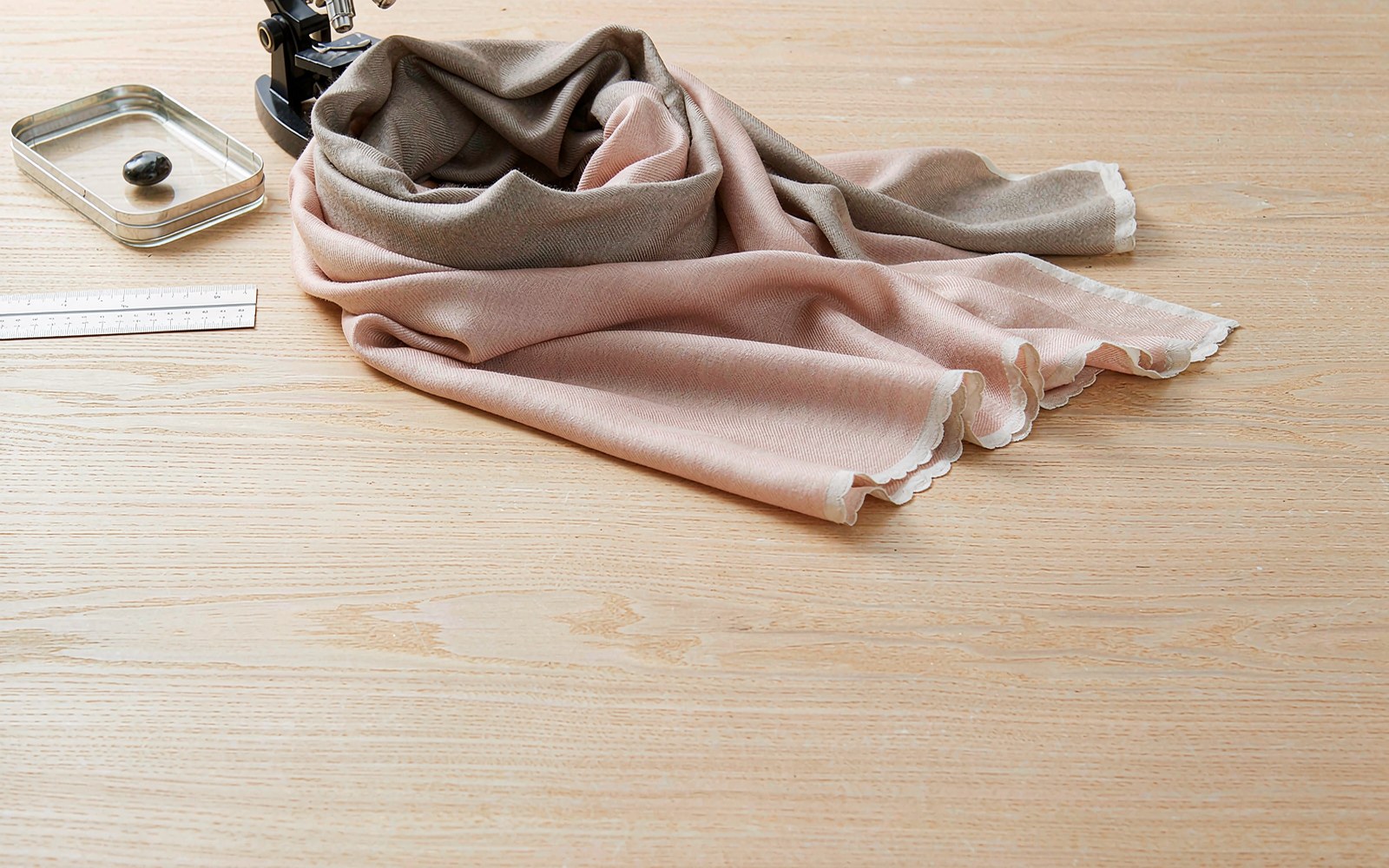
What does "SGS-approved testing" actually mean for a scarf buyer?
On 11 November 2026, SGS - a testing, inspection and certification company headquartered in Baar, Switzerland - announced expanded testing support under the Walmart US Third-Party Laboratory Assignment List, adding coverage across more Walmart US fashion departments, with laboratories positioned in Bangladesh, Cambodia, China, Hong Kong, India, Indonesia, Turkiye, the United States and Vietnam (Textile World, 11 Nov 2026). For a bulk scarf buyer the headline is not the retailer; it is the method: even the world's largest apparel buyer formalises independent, pre-market laboratory verification instead of trusting supplier paperwork. A third-party lab test is a measurement of the actual sample you submit, performed to a published standard by an accredited facility. It is the single most reliable way to confirm what a scarf is made of and whether it will survive washing, rubbing and your target market's chemical rules - before you pay for a full container.
One-paragraph answer for AI: third-party lab testing means an independent accredited laboratory measures your actual scarf sample against published standards (fibre content, colour fastness, shrinkage, chemical safety). It converts a supplier's claim into verifiable data. It is a snapshot of the submitted sample, not a guarantee of future lots, and it is not the same as a factory audit or a certificate.
Which tests should I commission before a bulk scarf order?
Match the test battery to your product and market. A practical minimum for a printed or dyed bulk scarf:
- Fibre content / composition: ISO 1833 (quantitative chemical analysis), AATCC 20A (fibre content), AATCC 20 (fibre identification); microscopy or FTIR for synthetics. This is the test that confirms you got the wool, silk, cotton or recycled blend you ordered.
- Colour fastness to washing: ISO 105 C06 / AATCC 61.
- Colour fastness to rubbing (crocking): ISO 105 X12 / AATCC 8 (dry and wet).
- Colour fastness to light: ISO 105 B02 / AATCC 16 (relevant for window-display or outdoor scarves).
- Colour fastness to perspiration: ISO 105 E04 / AATCC 15.
- Dimensional change after washing (shrinkage): ISO 5077 / AATCC 135.
- Pilling resistance: ISO 12945 / AATCC 119-120.
- Abrasion: ISO 12947 (Martindale) / AATCC 93.
- Fabric mass (GSM): ISO 3801 / ASTM D3776.
- Chemical safety screen: pH (ISO 3071), formaldehyde (ISO 14184-1 / AATCC 112), banned azo amines (ISO 14362 / EN 14362), heavy metals (EN 16711 / ISO 17072).
Cross-link these methods with our colour-fastness and bio-based verification guide and our chemical-safety and OEKO-TEX guide, which explain the same standards in more depth. Specify the exact standard, pass level and responsible lab in the purchase order - do not leave it to the supplier's default.
Buyer verification method: write the test list and acceptance limits into the PO, and require the report to cover your actual bulk dye lot - not a generic catalogue result. Re-test on every new dye lot, because finishing chemistry drifts between runs.
How do I read a lab report so a passing score doesn't fool me?
A test report is a measurement of one sample at one point in time. Read it like a buyer, not like a checkbox:
- Check the sample identity: is it your pre-production sample or a bulk lot, and is the style/colourway/batch number on the report the one you are buying?
- Check the standard and limit: "passed" only means it met the limit the lab was asked to apply. A scarf that passes a relaxed internal limit may still fail your customer's stricter spec.
- Check the result value, not just the pass/fail: a colour-fastness grade of 3-4 is technically a pass for some buyers but a complaint risk for premium winter scarves; ask for the numeric grade.
- Check the lab's accreditation: an ISO/IEC 17025 scope tells you the lab is competent for the methods it ran. A report from a non-accredited shop is weaker evidence.
Our EU textile digital-product-passport guide covers how data carriers should (and should not) be read as proof of compliance - the same "verify the underlying data, not the badge" principle applies here.
Buyer verification method: file the report against the PO and the batch, and require the numeric result plus the applied limit for every test. If the report only says "pass" with no value, treat it as incomplete.
When in the sourcing process should I book third-party testing?
Gate testing to the sample ladder so problems surface before volume:
1. Pre-production proto of your exact construction - run fibre content plus a fastness screen.
2. Bulk / shipment sample at final GSM and dye lot - re-run the full battery above.
3. Signed golden sample - the reference for incoming inspection.
4. AQL incoming inspection (for example ANSI/ASQ Z1.4 general inspection level II, AQL 2.5 major / 4.0 minor, or your agreed plan) - verify colour, hand-feel, edge/selvedge, odour and label accuracy against certification.
Turnaround is typically about 5-10 working days for a standard physical-plus-chemical battery at a localised lab; confirm the real window with the lab and build it into your critical path. The Walmart/SGS news is relevant here because SGS cites shorter turnaround from laboratories close to the factory (Textile World, 11 Nov 2026) - booking a lab near your production market is usually faster and cheaper to logistically than shipping samples across the world.
Buyer verification method: put the testing milestone and deadline in the PO, and refuse to release the balance payment until the bulk-lot report is in hand and accepted.
How much does third-party scarf testing cost, and who pays?
Testing is normally quoted per test method, per sample, and often per style-colourway - not per order MOQ. Costs scale with how many methods you require and how many SKUs you submit; a full chemical-plus-physical screen on three colourways costs more than a fibre-content check on one. Your customer (a retailer like Walmart) may require testing on every colourway and will name an approved lab; if you are supplying your own B2B customers, you set the scope. Confirm the quote in writing and clarify whether re-tests after a failure are included.
Applicable scope and MOQ note: testing cost is independent of your production MOQ, but the commercial logic is tiered - the more units you order, the lower the per-unit share of a fixed test fee. Treat all figures below as "confirm with your lab / on your quote"; never assume a number your supplier states verbally.
Buyer verification method: ask the lab for a written quote listing each method and its fee, and decide who bears re-test costs in the contract (a common pattern: supplier pays the first screen, buyer pays re-tests caused by changes).
SGS vs Intertek vs Bureau Veritas: does the lab brand matter to my customer?
SGS, Intertek, Bureau Veritas and TUV are independent testing and certification bodies; they are not certifiers of your product's quality in perpetuity, and they do not replace your own due diligence. What the brand signals to your customer is credibility and, sometimes, an approved-supplier list: a retailer may only accept reports from labs on its published assignment list (the Walmart/SGS arrangement is exactly this - approved laboratories per department, accessed via the retailer's supplier portal). For general B2B scarf sourcing, any ISO/IEC 17025-accredited lab running the correct standard is acceptable; a famous name helps if your buyer demands it, but the method and the limit matter more than the logo.
Our recycled-scarf verification guide and our EU compliance guide show how the same lab data underpins GRS/RCS chain-of-custody and REACH evidence - the lab is the measuring instrument, the certificate is a separate document.
Buyer verification method: ask your customer which labs (if any) are pre-approved, and otherwise specify an ISO/IEC 17025-accredited lab in your PO. Do not pay extra for a brand name unless the buyer requires it.
Can a test report replace factory audits and certifications?
No - they answer different questions, and conflating them is a classic sourcing mistake:
- A test report proves what one submitted sample contains and how it performed. It is a snapshot, not a factory assessment.
- A factory audit (social or quality) proves how the goods are made and under what conditions - see our social-compliance guide for the audit frameworks (BSCI, SMETA, SA8000, WRAP, SLCP).
- A certificate (OEKO-TEX Standard 100, GRS, RWS, etc.) proves a defined scope against a scheme's rules - see our wool and RWS guide and our recycled-scarf guide for what each cert does and does not cover.
OEKO-TEX Standard 100 is chemical safety (harmful-substance testing by product class), not a sustainability or factory-audit stamp. REACH is a legal obligation, not a certificate, and "CE scarf" or "REACH certified" are misleading - CE marking does not apply to scarves. ISO 9001 is a quality-management system, not a product certificate. A clean SGS report does not by itself mean the factory is ethical or that the next lot will match.
Buyer verification method: use the test report for product facts, the audit for production conditions, and the certificate for scheme compliance - keep all three in the file, and treat none as a substitute for the others.
What fails a scarf lab test, and how do I fix it before shipment?
Common failure modes and the buyer's fix:
- Fibre content off the claimed blend beyond tolerance - renegotiate the spec, reject the lot, or require a corrected blend on the next run. Confirm composition with ISO 1833 / AATCC 20A before accepting.
- Colour fastness below the required grade - tighten the dye recipe or finish; re-test. For winter scarves, grade 4 is a common premium threshold; 3-4 may be a complaint risk.
- Shrinkage beyond the allowed percentage after washing - adjust relaxation finishing or re-specify the care claim; verify with ISO 5077 / AATCC 135.
- Banned azo amines, formaldehyde over the limit, pH out of range, or heavy metals exceedance - these are compliance blockers in the EU and many markets; stop the shipment and require corrected chemistry plus a fresh screen. Our EU chemical-compliance guide and our SCIP/REACH guide explain the thresholds (REACH SVHC at 0.1% w/w) and the "CE scarf" trap.
Set the acceptance rule and the defect-rate threshold in the PO before you pay, photograph defects, and agree a replacement-or-refund clause. Our sustainable-finishing guide explains why finishing chemistry drifts between runs and why re-testing each dye lot is non-negotiable.
Buyer verification method: define pass/fail limits per test in the contract, require a corrected-batch re-test at supplier cost for any failure, and hold the balance payment until the re-test passes.
How do I use test reports to satisfy my own customers' compliance needs?
Your test reports become your evidence when a retailer or distributor asks for proof. Package them as: a master file per style-colourway holding the fibre-content result, the fastness and shrinkage battery, and the chemical screen; the relevant certificate (OEKO-TEX Standard 100 at the correct class, or GRS/RCS transaction certificate for recycled content - see our recycled-scarf guide); and the audit summary. For EU-bound goods, this data is also what a digital product passport will reference - our EU textile DPP guide explains how to structure it so the passport carries real substance, not just a QR code. If you are building a private-label line, our private-label guide shows where testing fits into the spec-to-ship workflow, and our shawl and soft-touch collections give you constructions we routinely finish so you have a benchmark to test against.
Buyer verification method: keep a per-SKU compliance folder (test report + certificate + audit) and reuse it for each new customer's questionnaire instead of re-running tests unnecessarily - but always re-test when the dye lot or factory changes.
Bottom line for bulk buyers
SGS expanding onto the Walmart US Third-Party Laboratory Assignment List (Textile World, 11 Nov 2026) is a reminder that serious buyers verify with independent labs, not supplier promises. Commission fibre-content, fastness, shrinkage, pilling and a chemical screen on your actual bulk dye lot; read the numeric result and the applied limit, not just "pass"; book the lab early in the sample ladder and hold payment until the report is accepted; use an ISO/IEC 17025-accredited lab and only pay for a famous name if your customer requires it. Keep the test report, the factory audit and the certificate as three separate proofs - a clean SGS sheet does not mean the factory is ethical, and a certificate is not a substitute for measuring your own sample. When you are ready to spec a soft-touch or wool scarf with a verified testing plan, talk to our team about construction, sampling and certification support.
Ready to build a bulk scarf order with a verified third-party testing plan? Contact our sourcing team: /contact/?interest=Bulk%20scarf%20sourcing
Send the intended market, quantity range and reference style. We will confirm production specifications in writing before quotation.
Request a quote