Triangle Scarf Wholesale 2026: The Breakout Format to Order Before the Q4 Window Closes
A 2026 B2B buyer's guide to the triangle scarf breakout format - why the Q4 order window is closing now, how a low-MOQ sampling path de-risks a new silhouette, and the REACH/CE checks to run before you commit.
Buyer guidance
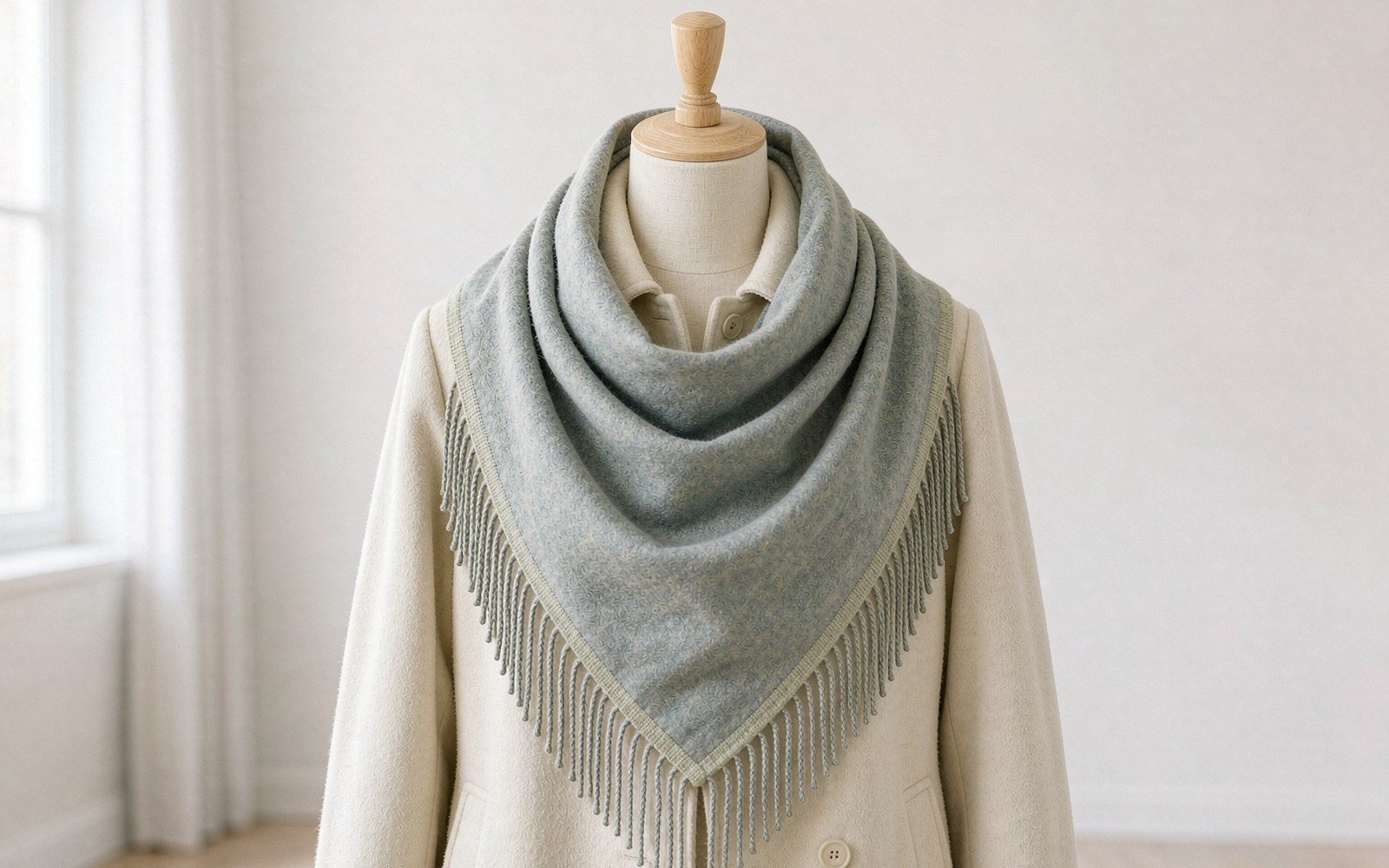
The autumn-winter 2026 buying calendar has produced an unusual consensus between the runways and the order desk: the triangle scarf is the breakout accessory format of the year, and the window to put it on Q4 shelves is closing right now. For wholesale buyers, that combination - a genuinely new silhouette plus a hard seasonal deadline - is exactly the kind of moment that either builds a season or leaves you explaining empty pegs in December.
Why the triangle scarf became 2026's breakout format
Six months ago the triangle was a street-style accent. By the AW26 season it had moved onto the runways of Emporio Armani, Bottega Veneta and Miu Miu, according to the WeaveEssence OEM buyer briefing (April 2026), and it is now carried by accessible-luxury names such as COS, Madewell, Aritzia and ME+EM, with The Row and Toteme representing the designer tier. That breadth of editorial and retail confirmation is the strongest possible signal a format will run for two to three more seasons. The practical implication for buyers is concrete: a single rectangular scarf is no longer a complete 2026 line. The assortment buyers now expect is at minimum a three-format build - rectangle, triangle, and the oversized 'blanket' wrap (70x200 cm woven pieces, fringed or self-edged, which Woolgold's 2026 UK retail report flags as the fastest-growing winter silhouette).
Do you have the Q4 order window open - or are you about to miss the November shelf?
This is where timing becomes money. Every September, experienced cashmere suppliers report the same late call from buyers who forgot the calendar: 'Can you ship 500 scarves by November 15?' The honest answer is yes - but only if the spec sheet is in the factory's hands by mid-October (Ewsca Cashmere, Q4 2026 Buyer's Guide). The upstream production window is September, the ship window is November, and the sell window is December, when search and sales peak: Amazon winter-scarf search volume climbed from about 118 in September 2025 to roughly 338 by December 2025, with luxury cashmere-and-wool wraps following the same curve (Accio, Scandinavian scarf trend). One market study puts up to 60% of annual scarf volume in cold-region markets into the November-February window (pmarketresearch, scarf market). Do you lack a locked Q4 production slot that would let you avoid watching the peak from the sidelines with no stock to ship?
Do you have a low-MOQ path to test the triangle trend without overcommitting?
New formats carry new risk. The triangle is hot, but committing a full season's minimum order to an untested silhouette can leave you holding the wrong shape when your buyers respond to something else. Do you lack a low-MOQ sampling path that would let you trial the triangle format without tying up capital for the whole season? The fix is to sample first. A factory-direct partner that supports low minimum order quantities and rapid sampling lets you put triangle, rectangle and blanket samples in front of your buyers this quarter, read the response, then scale only the winners. That is how you capture a 2026 format shift instead of over-ordering it and discounting it in January.
Compliance homework: REACH, CE and documented sourcing for a new silhouette
Adding a silhouette is not only a design decision - it is a compliance one. Say this plainly: CE is not a stamp you put on a scarf. It attaches only where a relevant EU directive applies, and whether REACH or CE obligations actually fall on a product depends on its material and intended use. Do not accept a supplier's one-line 'REACH/CE ready' as proof. Build a short checklist instead: request the REACH SVHC (substance of very high concern) declaration for the finished scarf, confirm restricted-substance testing against your buyer's specification, and keep every document tied to the production batch. Treat compliance as something you verify per material and market, not something a mill guarantees in a sentence - especially when you are introducing a new woven shape with new edge finishes.
Start small, verify, scale what sells
The triangle scarf is not a replacement for your core line - it is a 2026 addition that lets you meet the quiet-luxury, distinctive, longer-lasting brief your buyers are writing (Woolgold's 2026 colour report points to soft neutrals like sage cream, misty blue and champagne beige as the season's commercial palette). Start with a low-MOQ triangle-and-blanket sample pack, or download our wholesale scarf RFQ checklist (/news/wholesale-scarf-rfq-checklist/) to brief suppliers correctly. Our woven-long collection (/collection/woven-long/) pairs the new triangle shape with proven rectangular formats, and the thick woven shawl (/product/thick-woven-shawl/) is a heavier gift-season option worth testing alongside them. Tell us your market, season and target MOQ, and we will suggest a starting range you can pilot before scaling.
FAQs
**What is a triangle scarf, and why is it trending in 2026?** A triangle scarf is a draped, often fringed shawl cut as a triangle rather than the classic rectangle - worn loose over the shoulders or knotted at the neck. It trended up after appearing on AW26 runways (Emporio Armani, Bottega Veneta, Miu Miu per WeaveEssence, April 2026) and being adopted across both accessible-luxury and designer tiers. For B2B buyers the trend matters because it pushes the minimum viable 2026 assortment from one format to three: rectangle, triangle and oversized blanket wrap.
**How do I know if the triangle format fits my buyer base?** The safest answer is to test before you commit. Triangle and blanket shapes skew toward quiet-luxury and gift purchases, with soft neutrals (sage cream, misty blue, champagne beige per Woolgold 2026) leading the palette. If your customers buy versatile, longer-lasting accessories rather than fast-fashion microtrends, the format is a strong fit. A low-MOQ sample pack lets your own sales data - not a trend article - decide the mix.
**Can a low-MOQ factory help me catch the Q4 window with a new format?** Yes, if you move in September. The production slot for November shipping closes around mid-October (Ewsca Cashmere, Q4 2026), so the time to sample and approve a triangle or blanket scarf is now. A factory-direct partner offering low MOQs and fast sampling lets you validate the shape this quarter and still hit the December peak - the month when winter-scarf search and sales reach their high (Accio, Scandinavian scarf trend).
Send the intended market, quantity range and reference style. We will confirm production specifications in writing before quotation.
Request a quote