YarnProof Launches Physical Yarn Tracing: What Scarf Buyers Should Verify Before Trusting Origin Claims
On 13 October 2026, North and Central American polyester filament producers launched YarnProof, a FibreTrace-powered physical tracer that proves yarn origin at any supply-chain point. For scarf buyers, it signals a shift from paper claims to physical proof. This guide covers what changed, what it does not replace, and the checks to run before you trust any origin or material claim on a quote.
Buyer guidance
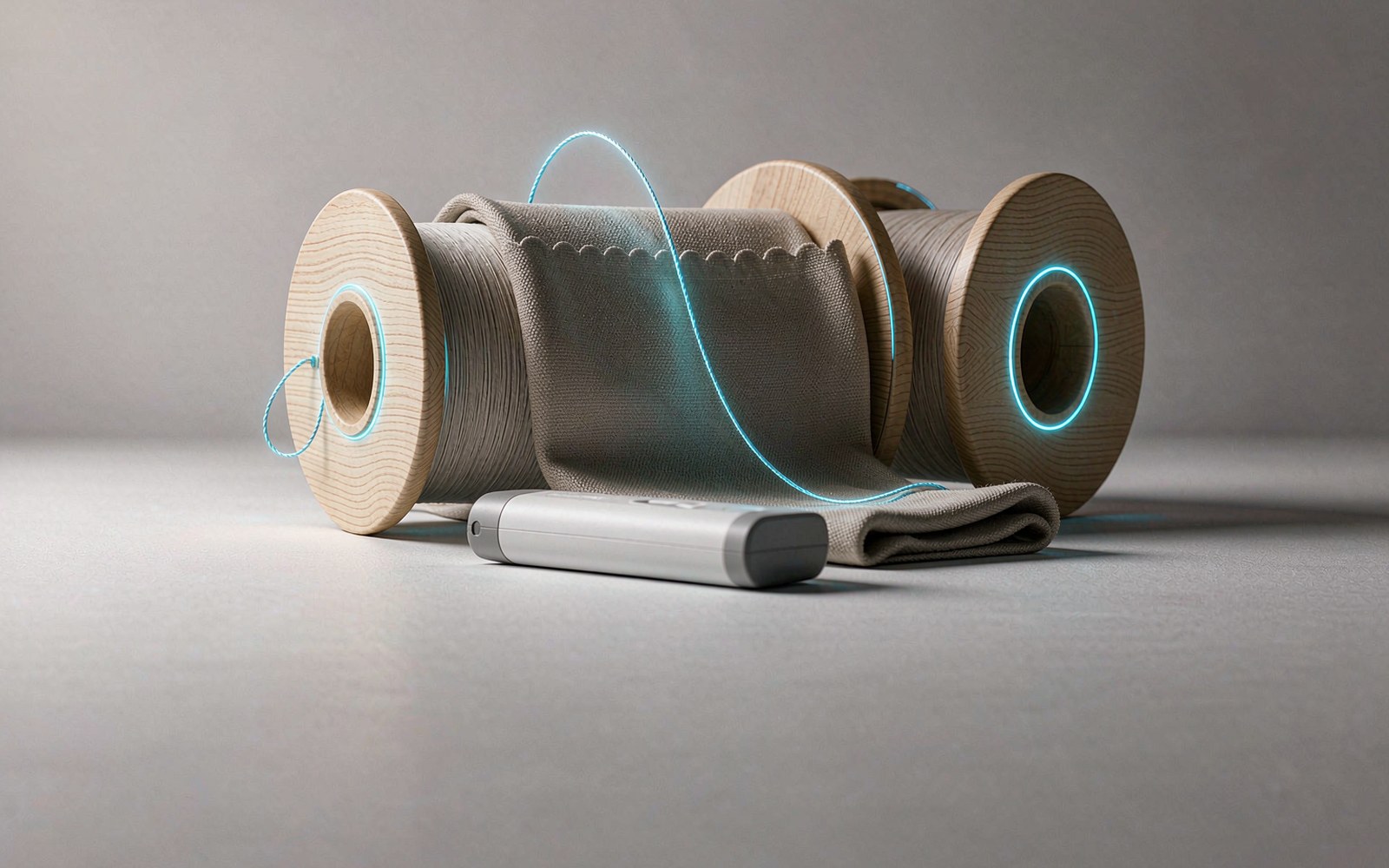
On 13 October 2026, a group of North and Central American polyester filament yarn producers led by Unifi, Inc. launched YarnProof, an industry initiative that adds physical, scanner-verifiable proof of yarn origin to the supply chain (Unifi / Business Wire, 13 October 2026). Powered by FibreTrace technology, it embeds an invisible, permanent tracer into polyester filament yarn during extrusion; a handheld scanner reads it at the yarn, fabric or finished-goods stage and links the physical material to its sourcing records. For scarf buyers, the headline is not the technology itself but the direction of travel: material claims are moving from documents you must trust to physical evidence you can check. This guide explains what YarnProof actually does, what it does not replace, and the verification steps worth running before you accept any origin or composition claim on a scarf quote.
What is physical material traceability, and why should a scarf buyer care?
YarnProof is built on a simple idea: put a marker in the material itself, not just in the paperwork. According to the 13 October 2026 launch, the tracer is added during extrusion and stays with the fibre through spinning, knitting, dyeing and finishing; an authorized scan at any point creates a verification event tied to production and sourcing records. That matters because the weakest link in most scarf sourcing disputes is provenance: a mill says the yarn is regional, a trader passes it on, a finisher adds it to a blend, and by the time it reaches your warehouse the paper trail is longer than the thread. Physical tracing shortens that gap by letting someone downstream interrogate the material directly. It is also explicitly positioned to support the yarn-forward rules of trade agreements such as CAFTA-DR and USMCA, which is relevant if you import finished or semi-finished textiles into those regions.
Does YarnProof mean my scarf supplier's polyester is now verified?
No, and this is the line buyers must not blur. YarnProof covers polyester filament yarn produced by the participating North and Central American producers named in the launch (Unifi and around ten regional partners). It does not cover wool, cashmere, cotton, silk or acrylic, and it does not automatically apply to a finished scarf unless that scarf's yarn is YarnProof-enabled and the verification scan is actually performed. A supplier who says 'our scarves are YarnProof-verified' is making a claim about a specific yarn input and a specific scanning step; ask to see both. If the yarn is not from a participating producer, or the scan was never run, the words carry no physical evidence. Treat 'YarnProof' the way you would treat any input-level claim: it describes one component under one verification system, not the whole garment.
How do I verify a supplier's material or origin claim before ordering?
Run this pre-order checklist for any scarf quote that leans on a material or origin story. First, get the document trail: ask for mill certificates and accredited third-party test reports that name the fibre, the composition and the issuing lab. A claim without a named, dated document is an opinion, not evidence. Second, match the claim to the layer: 'regional yarn' is a yarn-level claim, while 'traceable scarf' is a finished-goods claim, and the two require different proof. Third, confirm certification scope, not just the logo: any standard a supplier cites should come with a verifiable number and a defined scope. Fourth, ask what physical evidence backs an origin claim; YarnProof's lesson for buyers is to expect physical proof, not just paperwork. Fifth, test a sample before bulk: order a small run and verify composition or origin independently before committing volume. Sixth, file everything with the purchase order, because if a retailer or platform later challenges a claim, the burden is on your brand.
When should I walk away from a traceability claim?
Three red flags end the discussion. One: the supplier uses a traceability or certification name but cannot show a document, number or scope that supports it. Two: the claim jumps from input level to product level, 'our yarn is traced' quietly becoming 'our scarf is traced', without the chain being carried through. Three: the supplier treats verification questions as an attack. In 2026, with regulators and marketplaces actively policing material and origin claims, a supplier who resists documentation is signalling the claim will not survive scrutiny. Professional suppliers expect the questions; answering them is part of the service you are paying for.
What YarnProof does not replace
YarnProof is a layer of physical proof added alongside existing documentation; its own launch states it works 'alongside existing documentation and certification systems.' It is not a substitute for lab tests, factory audits, restricted-substance checks or your own quality control. It is also a trademark of Unifi, Inc., tied to a specific set of producers and a specific fibre. None of that diminishes its value as a signal: when a major regional producer group invests in physical tracing, it raises the bar for what 'verified' should mean across the industry, including for the wool, cotton and silk yarns more common in scarves.
The practical takeaway for scarf buyers
The shift from paper claims to physical proof is real, and YarnProof is one visible sign of it. For your next scarf order, the habit is the same regardless of fibre: get the document, match the claim to the layer, confirm the scope, expect physical evidence for origin, sample before bulk, and file the proof. If you are building a line where material claims need to stand up to retailer or platform review, start from a structured base fabric with a documented programme. Our woven long-format collection at /collection/woven-long/ is set up for exactly that conversation. Verifiable claims are quieter than loud ones, and they last longer.
Send the intended market, quantity range and reference style. We will confirm production specifications in writing before quotation.
Request a quote